
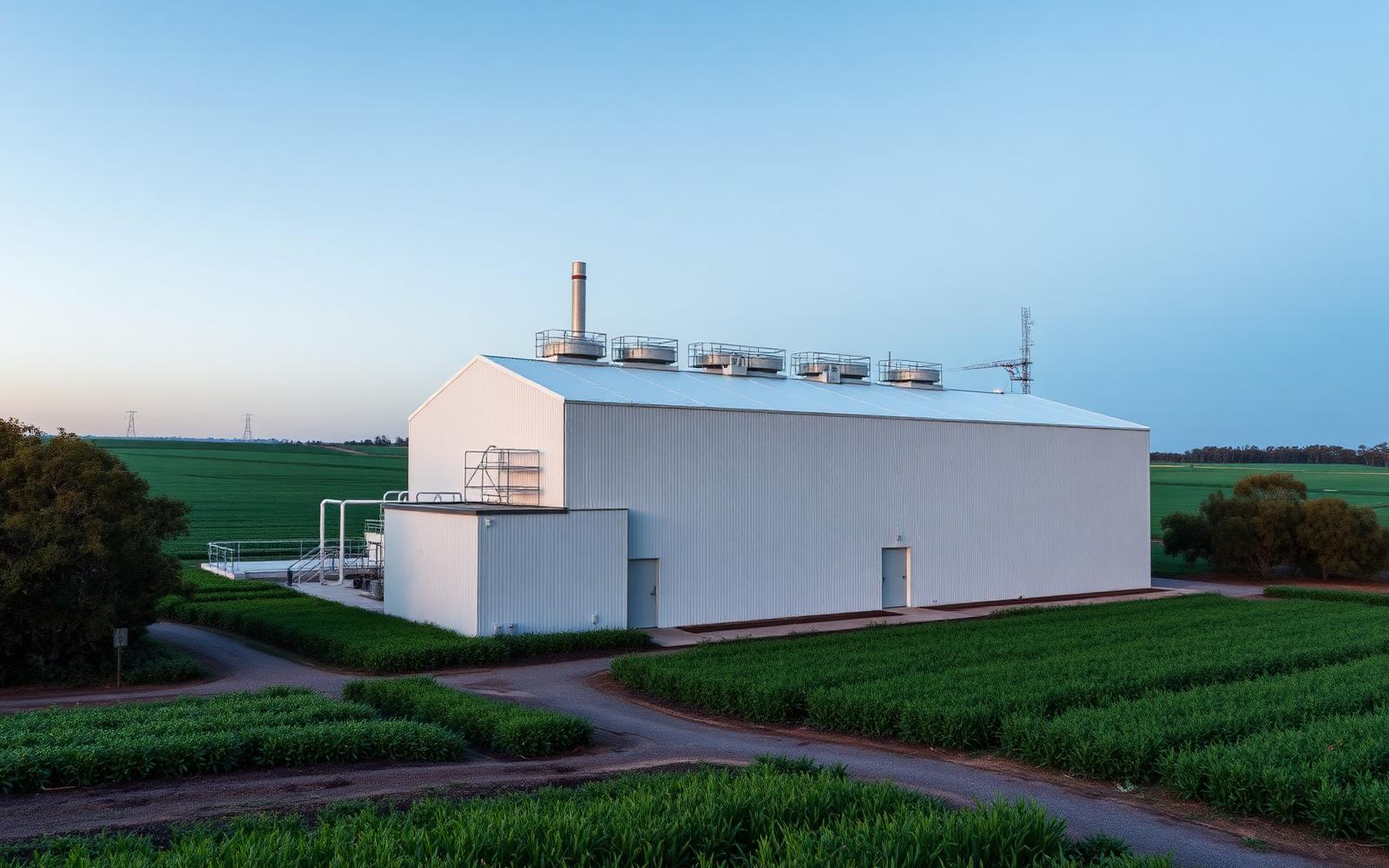
Waste Recovery & Circular Economy
A proposed model — honest, measured, replicable.
We frame this work as a pilot framework for councils and industry partners. We don't promise miracles; we design pilots that generate the evidence.
The Challenge
Organic waste is expensive — and it leaks value.
- Rising landfill disposal costs across Australian regions.
- Methane emissions from decomposing organics in landfill.
- Nutrients, water and heat lost that could improve local soil, agriculture and energy security.
The Proposed Solution
A menu of recovery pathways — chosen to fit the region.
Anaerobic digestion
Convert food and organic waste into biogas and digestate.
Composting
Industrial-scale composting for soil improvement products.
Biochar
Pyrolysis of woody residues into carbon-negative soil amendment.
Waste-to-energy
Thermal recovery for hard-to-recycle residual streams.
The Process
An 8-step pilot framework.
- 01
Complete a waste audit — categorise streams, volumes and current disposal costs.
- 02
Engage local councils, farmers, food processors and industry partners.
- 03
Identify the highest-value recovery pathway (digestion, compost, biochar, WtE).
- 04
Design a controlled pilot with clear success metrics and reporting cadence.
- 05
Secure permits, safety framework and community engagement plan.
- 06
Build the pilot facility using proven equipment, sized conservatively.
- 07
Operate for 12–18 months with independent measurement and public reporting.
- 08
Review results before expanding — refine the model, then replicate regionally.
The Possible Outcomes
If it works — and we design pilots to find out honestly — the region gains:
Lower emissions from diverted organics
New regional jobs in operations and logistics
Recovered water and heat for local reuse
High-quality compost and biochar for farms
Reduced landfill dependence and disposal costs
A verified, replicable model for other councils
Ready to move?